The 12 best brands on social media to follow in 2026

TABLE OF CONTENTS

TL;DR
The companies that use social media for marketing best in 2026 treat their feeds as a product, not a billboard. ✅ Our top three to study right now: Duolingo (chaos-native humor), Nike (social-first launches), and CeraVe (an internet-wide inside joke that broke sales records). ❌ The mistake to avoid: copying a brand's tone without copying its consistency. What makes these accounts work is a steady cadence of on-brand creative, not one viral swing.
Introduction
Companies that use social media for marketing are brands that use platforms like Instagram, TikTok, YouTube, and X to build awareness, engage an audience, and drive sales, instead of relying only on paid ads. The best of them do something harder than going viral once: they show up, on brand, every single week.
We spend our days making social content for growing companies, so we pay close attention to who is actually pulling this off. Below are 12 well-known consumer brands worth following in 2026, what each one does differently, and the specific move you can borrow. If you are hunting for an agency to run this for you rather than a brand to learn from, start with our guide to the best social media design companies instead.
What makes a brand great on social media?
A brand is great on social media when it posts platform-native content consistently, has a recognizable voice, and turns its audience into participants rather than spectators. Follower count matters far less than whether people share, save, and quote the content without being asked.
Here is what we looked at when picking this list: a clear and consistent voice, content built for the platform (not a repurposed TV ad), a two-way relationship with followers, and creative that stays on brand even when it is being weird. Nearly every "best social media companies" list rewards the same thing, which is discipline dressed up as spontaneity. The viral moments you remember sit on top of months of unglamorous, on-brand posting.
1. Duolingo: chaos marketing with a mascot
Duolingo is the clearest proof that a brand can win by being unhinged on purpose. In February 2025 the language app "killed off" its owl mascot, Duo, posting fake memorials across TikTok and X. The stunt became a cultural event, and when Duo "returned," the payoff was enormous.
Strategy: platform-native humor and creator energy over polish. The #ripduo hashtag passed 45,000 mentions, and the resurrection pushed Duolingo's TikTok following from roughly 50k to 16M in a matter of days. None of it would work without the daily volume of small, weird posts that trained the audience to expect the unexpected.
Best for: brands willing to trade a little dignity for genuine attention, and confident enough to post daily. ✅
2. Nike: launches that break online first
Nike treats social as the launch venue, not the afterthought. Its 2025 "So Win" campaign, narrated by Doechii and featuring athletes like Caitlin Clark and Sha'Carri Richardson, dropped online before it ever aired on TV, so the conversation was already peaking by game day.
Strategy: emotional, social-first storytelling. The ad pulled 66 million views on Instagram within 24 hours, becoming Nike's most-watched video on the platform. The lesson is sequencing: give social the story first and let it build momentum the broadcast slot cannot.
Best for: brands with a real point of view that want a launch to feel like a moment. ✅
3. CeraVe: the slow-burn internet mystery
CeraVe ran one of the most patient social campaigns in recent memory. In early 2024 it quietly fueled a rumor that actor Michael Cera was the "real" creator behind the brand, let the internet run wild, then revealed the truth in a Super Bowl ad.
Strategy: build a mystery, let creators carry it, then pay it off. The campaign reportedly earned 32 billion impressions and a 1,350% spike in brand searches, and drove record moisturizer sales. It worked because CeraVe committed to the bit for weeks instead of explaining the joke too early.
Best for: brands with a name or product quirk they can turn into a story, and the patience to let it breathe. ✅
4. Spotify: turning your own data into content you share
Spotify Wrapped is the gold standard for personalized marketing. Every December, each listener gets a custom recap of their year in music that they can post in one tap, which hands Spotify millions of pieces of free, individualized promotion.
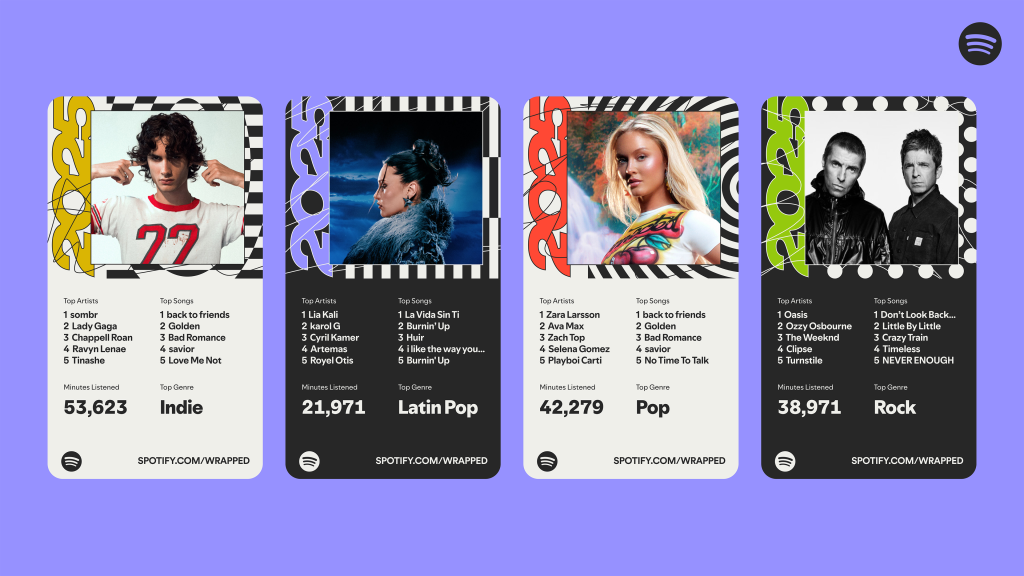
Strategy: data storytelling that flatters the user. In 2024 Wrapped added an AI-hosted podcast, and by early 2025 Spotify reported 268 million subscribers and 678 million monthly users. The takeaway for smaller brands: you probably sit on customer data that could become a shareable, personalized moment.
Best for: any brand with usage data it can reflect back to customers as a story. ✅
5. National Geographic: a community built on great photography
National Geographic grew one of the largest brand communities on social by handing the camera to its audience. Its "Your Shot" program invites photographers of every level to submit work, with the best featured on themed accounts.
Strategy: crowd-driven visual storytelling. That community approach helped push accounts like @natgeotravel past 46 million followers. The brand rarely sells anything directly, which is exactly why people keep following it.
Best for: brands with a visual product or mission that can spotlight their audience's creativity. ✅
6. Wendy's: the friend with zero filter
Wendy's turned customer service snark into a marketing channel. On X, the brand roasts competitors and fires back at followers with a tone no fast-food chain is "supposed" to have, and that contrast is the whole point.
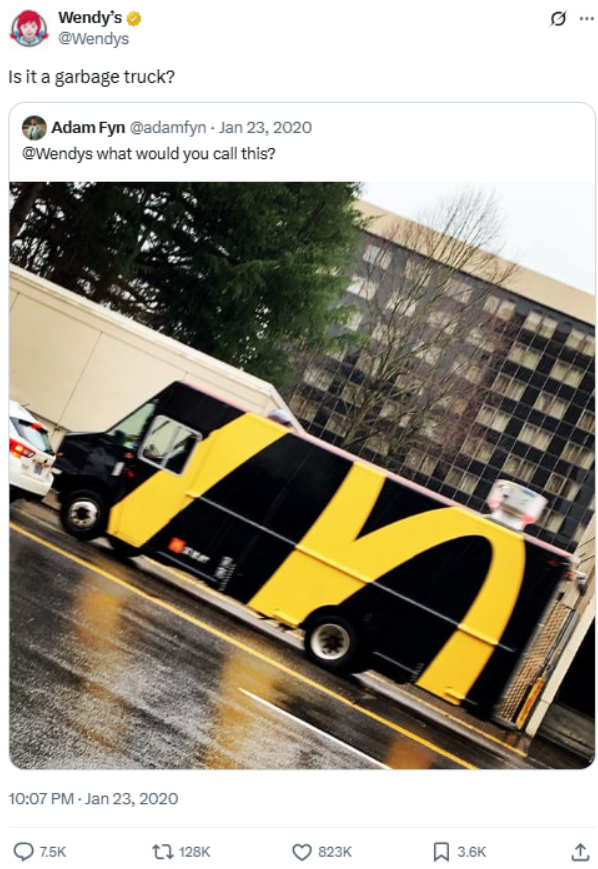
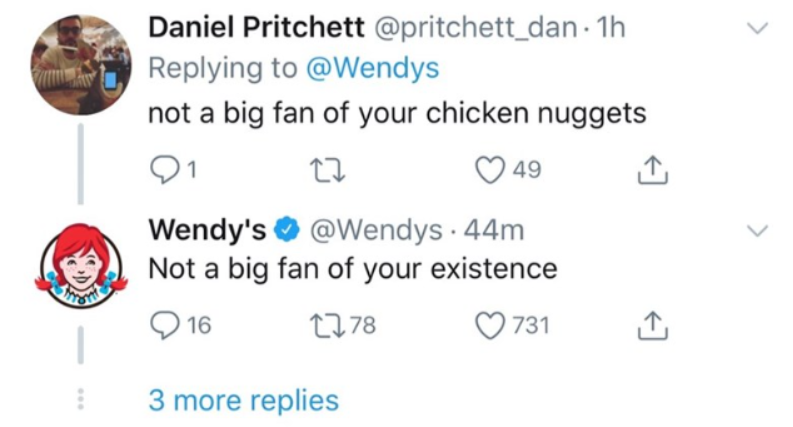
Strategy: a consistent, sharp personality that people follow for entertainment, not coupons. The risk is obvious, so Wendy's earns it with judgment: it punches at rivals and plays with fans, but knows where the line is. Voice this distinct only works when one team owns it and keeps it consistent.
Best for: challenger brands with the nerve to have a personality (and the sense to know its limits). ✅
7. Airbnb: experiences people can't help but post
Airbnb builds its social content around real-world moments too good to keep to yourself. Its 2024 "Icons" program offered surreal, celebrity-hosted stays, from the floating Up house to a night in Paris's Musée d'Orsay.

Strategy: engineer experiences designed to be shared. As Superside notes, these stays sold out almost instantly and generated waves of organic buzz because guests, press, and fans all posted them at once. The content markets itself when the experience is remarkable enough.
Best for: brands that can turn a product into an experience worth photographing. ✅
8. Coca-Cola: personalization at global scale
Coca-Cola keeps proving that a decades-old idea can feel new. In 2025 it relaunched "Share a Coke" for a younger audience, adding QR codes, personalized video, and cross-platform activations aimed squarely at Gen Z.
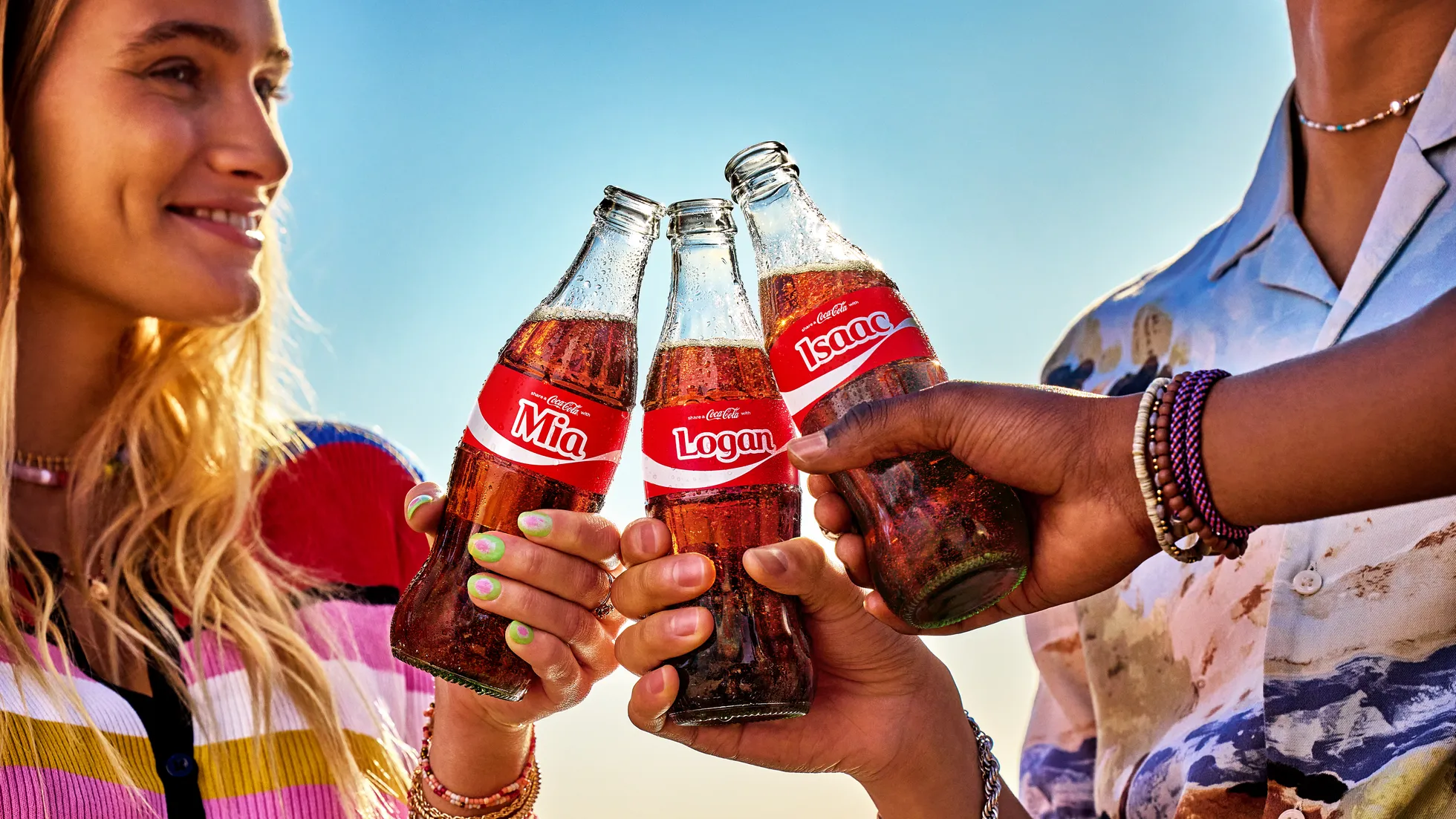
Strategy: pair nostalgia with modern personalization. The original campaign worked because people found their own name on a bottle; the relaunch works because it moves that same feeling onto the platforms Gen Z actually uses. Emotion plus personalization travels further than either one alone.
Best for: established brands with an asset worth reviving for a new generation. ✅
9. Starbucks: employees as the marketing team
Starbucks leans on the people behind the counter. Its employee-focused campaigns, like #ToBeAPartner, turn baristas into storytellers who show the brand giving back to local communities.
Strategy: employee-generated content that reads as authentic because it is. As Meltwater documented, this approach floods the brand's feed with real faces and real stories, which lands harder than any polished studio spot. Employee content is also one of the fastest-rising formats heading into 2026.
Best for: brands with a frontline team whose day-to-day is worth showing. ✅
10. Glossier: a brand built by its customers
Glossier grew by making its customers the stars. Rather than glossy campaigns, its feed leans on real people, reposted reviews, and user-generated content that treats the community as the product's best advertisement.
Strategy: UGC and authenticity over gloss. The approach builds trust because prospective buyers see people like them, not models, using the products. It also gives Glossier a near-endless content supply it does not have to produce alone.
Best for: consumer brands with an engaged customer base willing to create content. ✅
11. Netflix: joining the conversation, not just posting into it
Netflix does not just promote its shows, it becomes part of the way people talk about them. Its accounts react in real time, meme their own catalog, and speak the same language as the fandoms they are courting.
Strategy: culture-native commentary. Because the team clearly watches the same internet its audience does, the posts feel like they come from a fan, not a corporate handle. That fluency is what earns replies and reshares instead of scrolls.
Best for: content and entertainment brands that can credibly live inside online culture. ✅
12. Burger King: listening, then changing course in public
Burger King shows what happens when a brand treats social as research, not just reach. Its "There's a New King and It's You" campaign used real customer feedback to publicly acknowledge where the experience fell short, then promised to fix it.
Strategy: social listening turned into a visible business pivot. As Sprout Social highlighted, that level of accountability builds trust in a way a standard ad cannot. Using audience insight out loud signals that the brand is actually paying attention.
Best for: brands ready to use customer feedback as a story instead of hiding it. ✅
What the best brands on social media have in common
The best brands on social media share four habits: a consistent and recognizable voice, content designed for each specific platform, genuine two-way engagement with followers, and the discipline to keep creating on brand when no single post is going viral.
Notice what is not on that list: a huge budget. Duolingo's team runs lean. The LA Public Library, another 2026 breakout, does it with librarians and a phone. What separates these accounts is not spend, it is a clear point of view and a steady output of creative that looks and sounds like them.
💡 If you take one thing from this list, take that: pick a voice, then feed it consistently. The brands that win treat social as an ongoing strategy, not a campaign you switch on and off.
Get social media design to match the best brands
Here is the honest catch with everything above: the strategy is the easy part to admire and the hard part to sustain. Every brand on this list is shipping a steady stream of on-brand graphics, videos, and posts every week. That consistency, not any single idea, is what most teams struggle to keep up.
That is the gap ManyPixels fills. Instead of hiring per project or stretching one in-house designer thin, you get a design team that delivers a daily output every business day, so your social calendar never stalls waiting on creative. It is why 72% of our customers choose a dedicated designer plan: they want a partner who learns their brand, not an anonymous queue.
- ⚡ Daily output every business day, with 24 to 48 hour first drafts
- 🎨 One team across social graphics, video editing, and web assets, all on brand
- 💰 Flat monthly pricing (Advanced from approximately $699/mo up to Design Team at approximately $2,599/mo). Check manypixels.co/pricing for current plans
Marketing teams feel the difference fastest. As Beth Shepherd, Marketing Manager at Virtual Service Operations, put it:
ManyPixels has been a game-changer for our marketing team. They've quickly understood our brand and hit the ground running, producing everything from brand and website graphics to social media assets and video editing. Their turnaround time is impressive, and they're incredibly responsive. It never feels like we're waiting on creative support. They feel like an extension of our internal team.
👉 Explore ManyPixels plans and see which one fits your social output.
{{SOCIAL_BANNER="/dev/components"}}
Frequently asked questions
Bottom line
The brands worth following in 2026 win on consistency and voice, not budget. If you study only three, make them Duolingo, Nike, and CeraVe, then focus less on their viral moments and more on the steady, on-brand output underneath them. That output is the part you can actually copy, and it is the part most teams underestimate.
{{SMD_PORTFOLIO="/dev/components"}}

Having lived and studied in London and Berlin, I'm back in native Serbia, working remotely and writing short stories and plays in my free time. With previous experience in the nonprofit sector, I'm currently writing about the universal language of good graphic design. I make mix CDs and my playlists are almost exclusively 1960s.

Top-quality designers
A complete creative team at your fingertips: graphic and web designers, illustrators, and more.

Lightning-fast turnaround
Get start today and receive your first update on the next business day.

All-inclusive pricing
Unlimited requests and revisions. One flat monthly fee. No surprises.

Flexible & scalable model
No contract. Scale up and down as needed. Pause or cancel at anytime.
Continue reading

.jpeg)
Explore some of our best designs
Get inspired by a curated selection of ManyPixels work. Download the portfolio to see what our team can create.