Best websites to sell t-shirt designs online (2026)
.png)
TABLE OF CONTENTS

TL;DR: Where to sell t-shirt designs in 2026
- ✅ Best for beginners with zero traffic: Redbubble and TeePublic. Upload a design, they bring the buyers, you keep a royalty.
- ✅ Best for reach: Amazon Merch on Demand puts your designs in front of the biggest apparel audience online, if you get accepted.
- ✅ Best for building a real brand: Etsy or your own Shopify store connected to Printful or Printify. More work, much higher margins.
- ❌ Skip if you want quick passive income: platforms that need you to drive all your own traffic (a self-hosted store) before you have an audience.
The honest version: no platform "works best" for everyone. Marketplaces trade lower margins for built-in traffic. Your own store trades effort for control and profit. Pick based on whether you have an audience yet.
If you want to sell t-shirt designs without buying inventory, printing anything, or shipping a single package, print-on-demand is how it works. You upload art, a platform prints and ships each shirt after someone buys it, and you keep a cut. The custom t-shirt market is projected to pass $9.8 billion by 2030, so the demand is real. The catch is that the 20-plus sites promising to make you money are not interchangeable.
Some are marketplaces with millions of built-in shoppers. Some are suppliers that print your designs but expect you to bring the customers. We tested the workflow across both models and sorted the ones worth your time from the ones that quietly eat your margin. Here is the breakdown.
What does it mean to sell t-shirt designs online?
Selling t-shirt designs online means uploading your artwork to a print-on-demand platform that prints your design on a shirt and ships it only after a customer orders. You never hold stock. You earn either a fixed royalty or a margin you set above the platform's base cost, and the platform handles printing, packing, and delivery.
There are two ways to do it. On a marketplace (Redbubble, Amazon Merch, TeePublic), the platform owns the storefront and the traffic, and you get a smaller cut in exchange. With your own store (Etsy or a Shopify site plugged into Printful or Printify), you run the shop, set the prices, and keep more, but you have to find the buyers yourself. Most successful sellers start on a marketplace, then graduate to their own store once they know which designs sell.
Best print-on-demand marketplaces to sell t-shirt designs
Marketplaces are the fastest way to start. They already have millions of shoppers, so a good design can sell without you spending a cent on ads. The trade-off is a smaller cut per sale and heavy competition. These are the ones worth uploading to first.
1. Redbubble: the best starting point for beginners
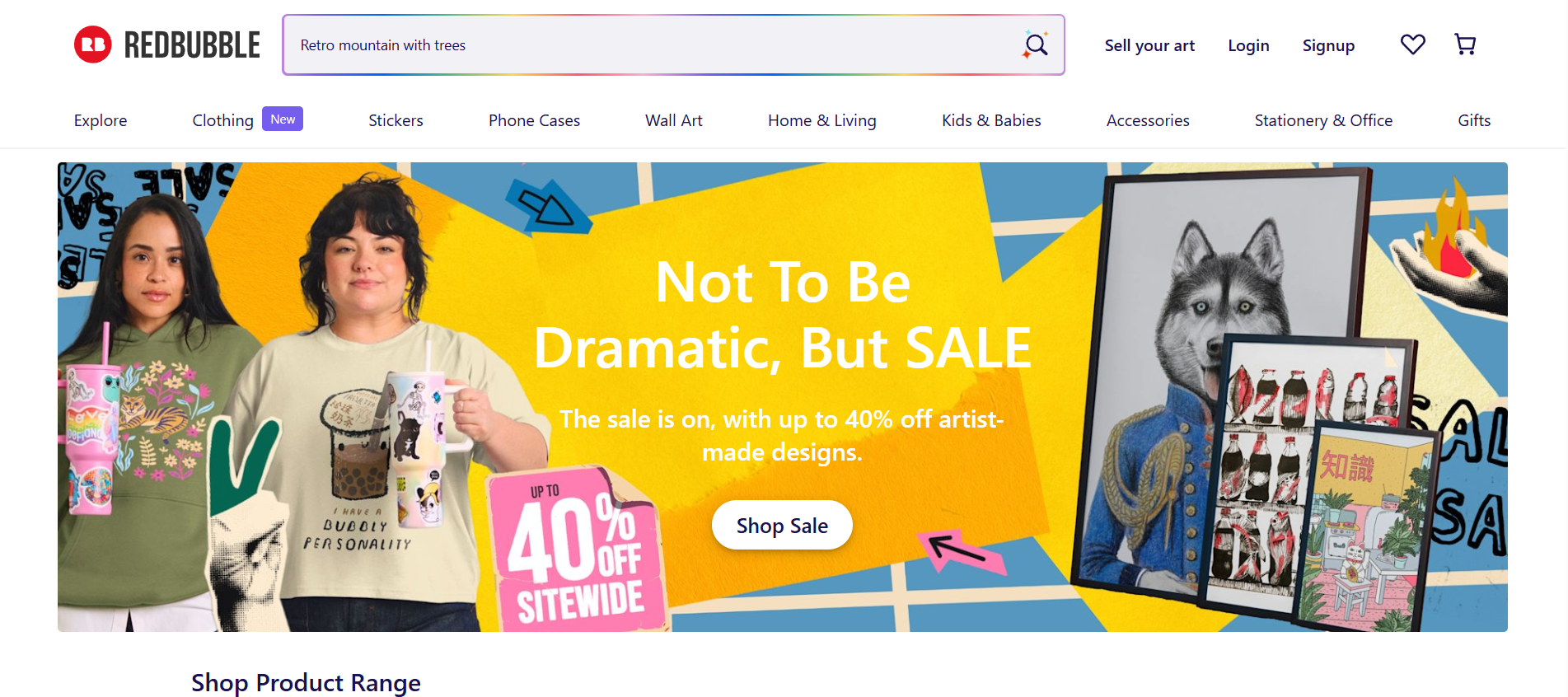
Redbubble is where most new designers should start. It operates globally, carries more than 70 product types beyond shirts, and lets you set your own profit margin (the default is 20%). Upload once and your design is buyable on tees, hoodies, stickers, and home decor within minutes.
The non-obvious catch: base prices shift with the buyer's delivery country because of local production and tax costs, so your final retail price is not perfectly predictable worldwide. That is fine for casual income, less fine if you obsess over consistent pricing.
Best for: First-timers who want reach without setup ✅
Not ideal for: Sellers who need fixed, predictable retail prices ❌
2. Amazon Merch on Demand: the most reach, if you get in
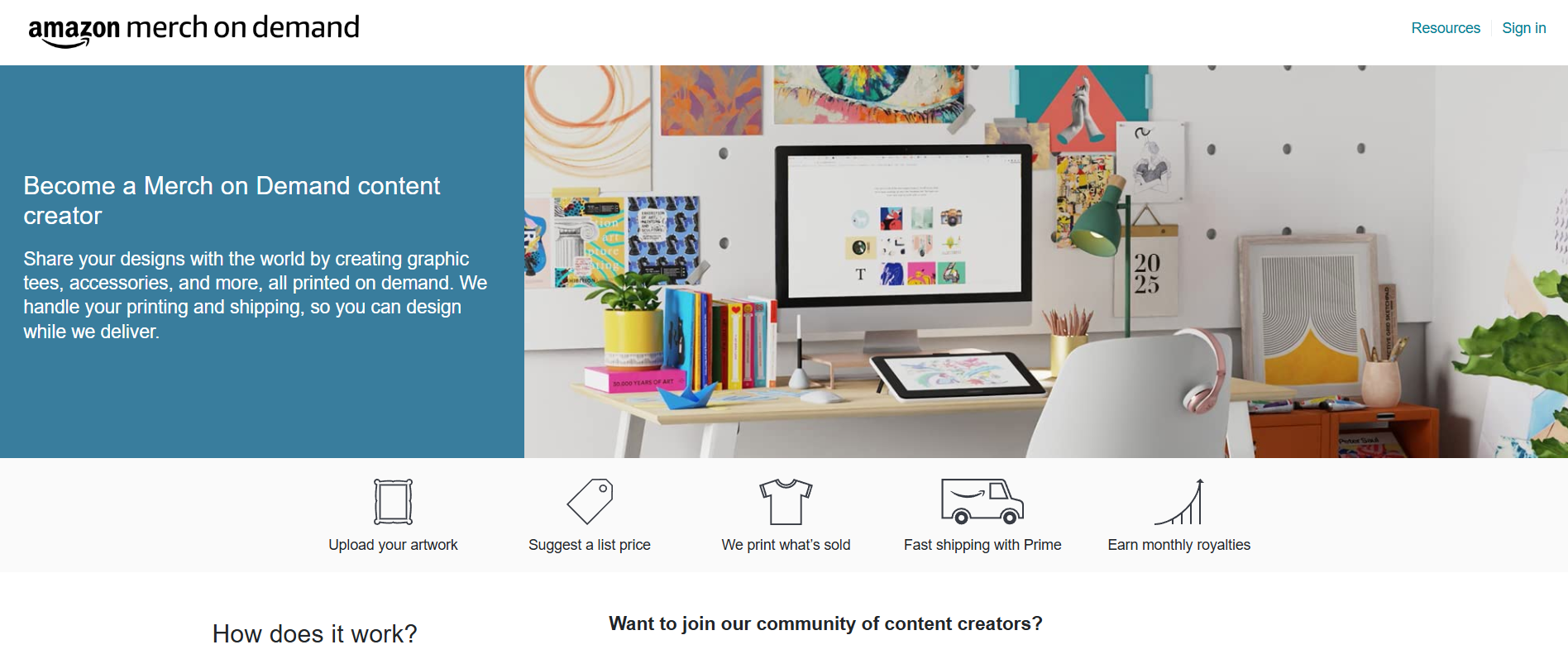
Amazon Merch on Demand (formerly Merch by Amazon) puts your designs into the largest apparel audience online. Amazon now leads the US apparel market, so a design that ranks can sell in serious volume with zero marketing from you.
It is also the hardest to join. You apply, and you start limited to a small number of designs (a tier system that expands only as you make sales). The upside of that gate is less low-effort competition once you are in. Use the Amazon Best Seller Rank to see which styles and niches are actually moving before you design.
Best for: Sellers who want the biggest possible audience ✅
Not ideal for: Anyone who wants to start uploading today with no wait ❌
3. TeePublic: fast uploads and predictable flat payouts
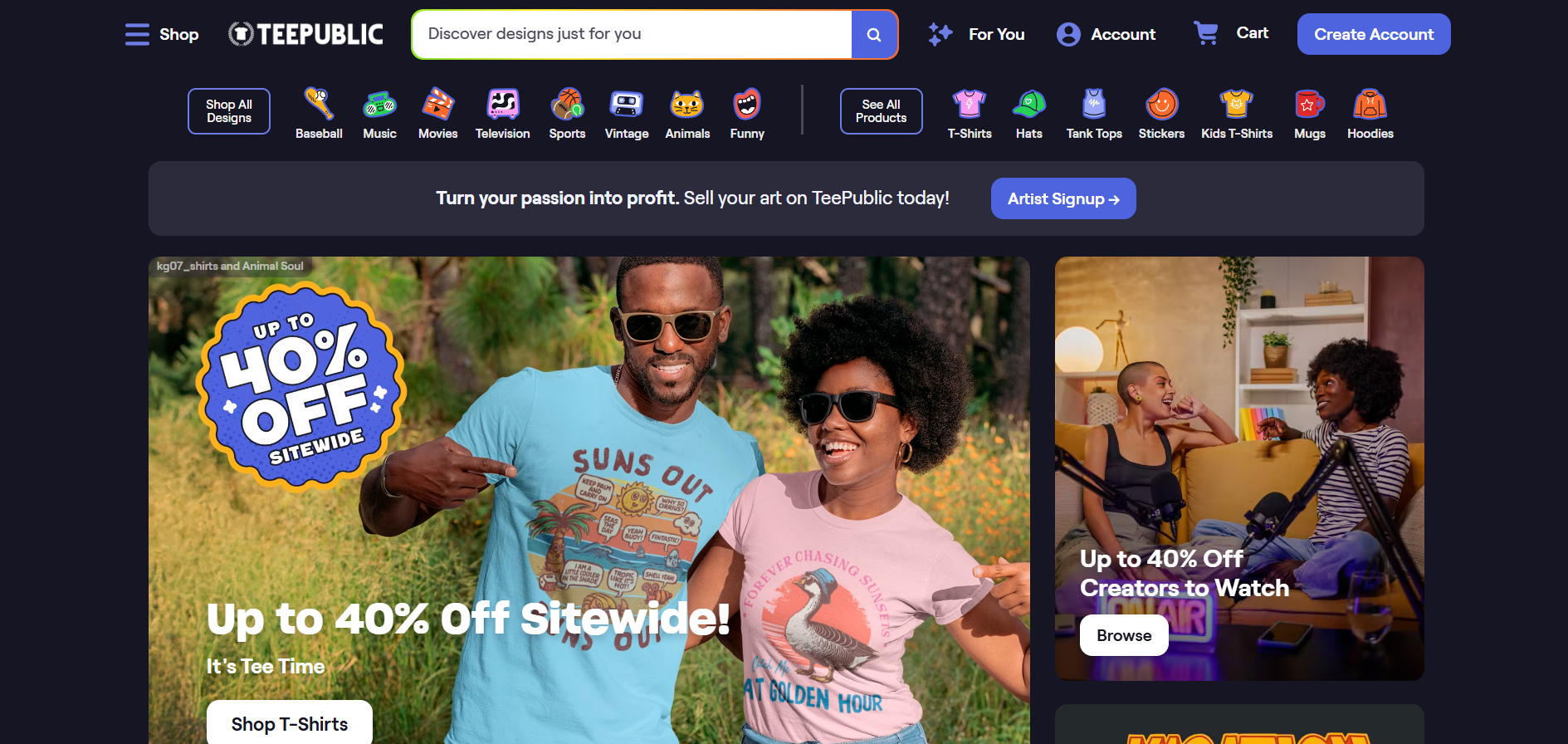
TeePublic (owned by Redbubble's parent company) is one of the simplest marketplaces to use. Instead of a percentage, it pays flat rates per item, roughly $2 to $4 per shirt depending on whether it sells at full price or during one of the platform's frequent sitewide sales.
Those constant sales are the thing to understand going in. They drive volume, but your per-shirt take drops during them. Many designers cross-list the same art on TeePublic and Redbubble to cover both audiences.
Best for: Simple, high-volume uploading ✅
Not ideal for: Sellers who dislike frequent discount pricing ❌
4. Society6: art-led designs and home decor
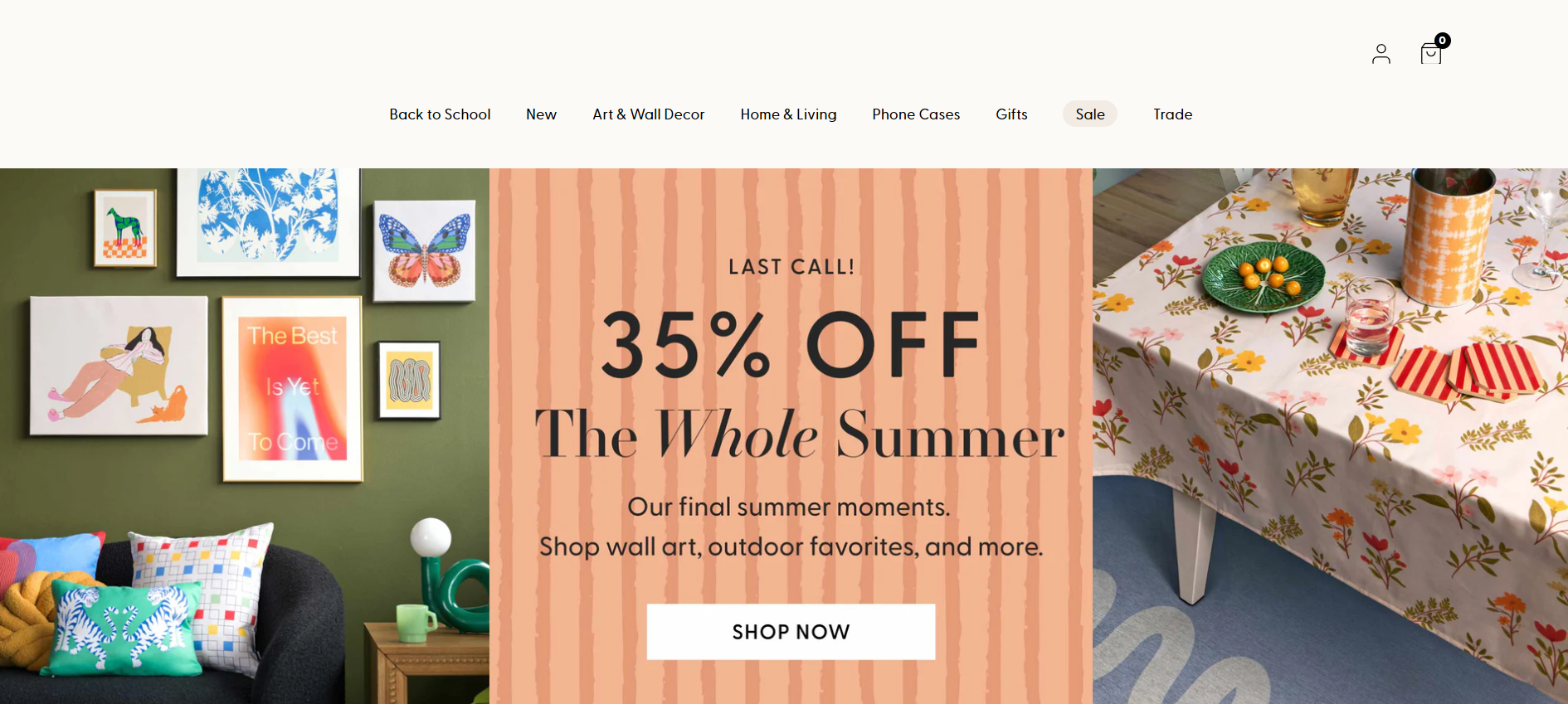
Society6 leans toward artists and illustrators more than slogan tees. It pays a flat 10% royalty on most products, with art prints being the exception (you set your own price there). Big names like DC Comics and Disney have used it, so shopper trust and traffic are solid.
The flat 10% means shirts can end up priced higher than on other marketplaces, which suits detailed or premium artwork more than cheap graphic tees. Its quality control is a genuine strength for complex, print-heavy designs.
Best for: Illustrators and art-forward products ✅
Not ideal for: Volume sellers chasing the lowest retail price ❌
5. Zazzle: the most customizable products
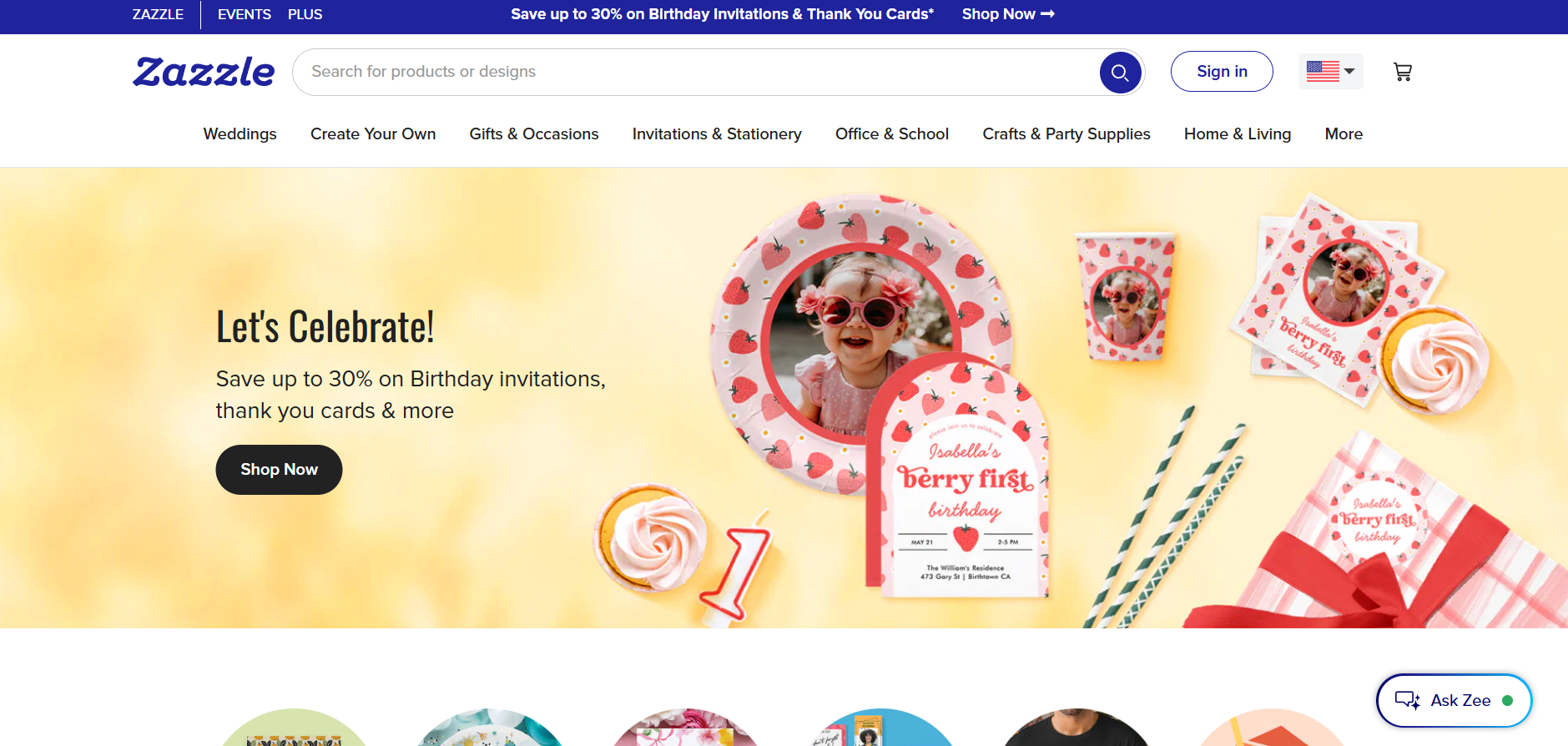
Zazzle lets you set your own royalty, anywhere from 5% to 50% on physical products. Its standout feature is deep customization: buyers can change fonts, colors, and layouts, which can raise the final price and your earnings. The platform automatically adapts your design's size and format so it prints as intended.
Set your royalty too high and you price yourself out; too low and you leave money on the table. Zazzle rewards sellers who test their margin rather than guess it.
Best for: Personalizable, event-driven designs ✅
Not ideal for: Set-and-forget sellers who never revisit pricing ❌
6. Spring (formerly Teespring): built for creators with an audience
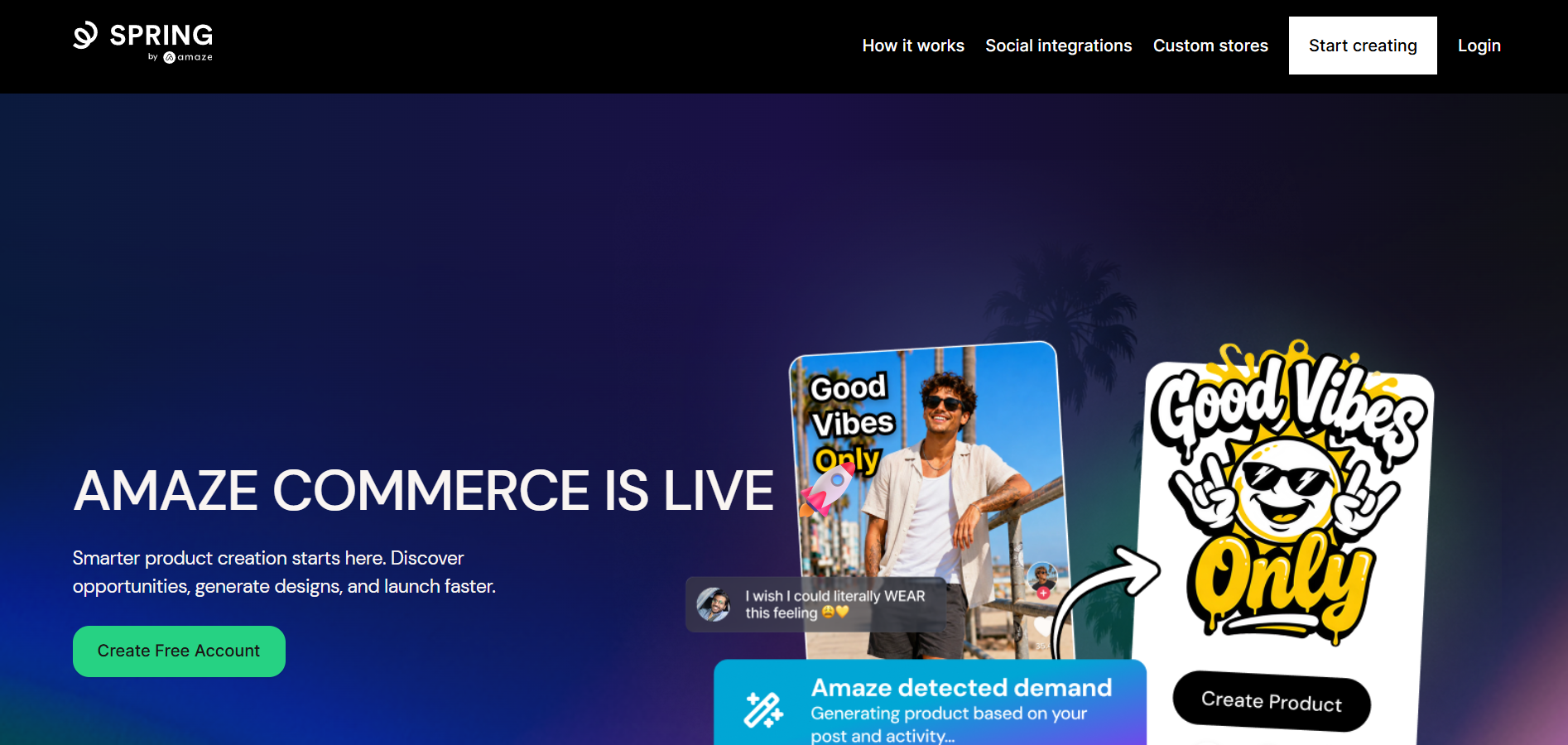
Spring, the platform you may still know as Teespring, rebranded in 2021 and now operates under Amaze. It is aimed at creators who already have a following on YouTube, TikTok, or Instagram, with integrations that let you sell merch directly to your audience. You keep the profit above the base cost, and there are no campaign time limits like the old Teespring model imposed.
Be real: Spring has almost no organic marketplace traffic of its own. If you do not have an audience to sell to, this is not the place to start.
Best for: Creators and influencers with an existing following ✅
Not ideal for: Beginners with no audience yet ❌
7. Threadless: community-driven, curation-first
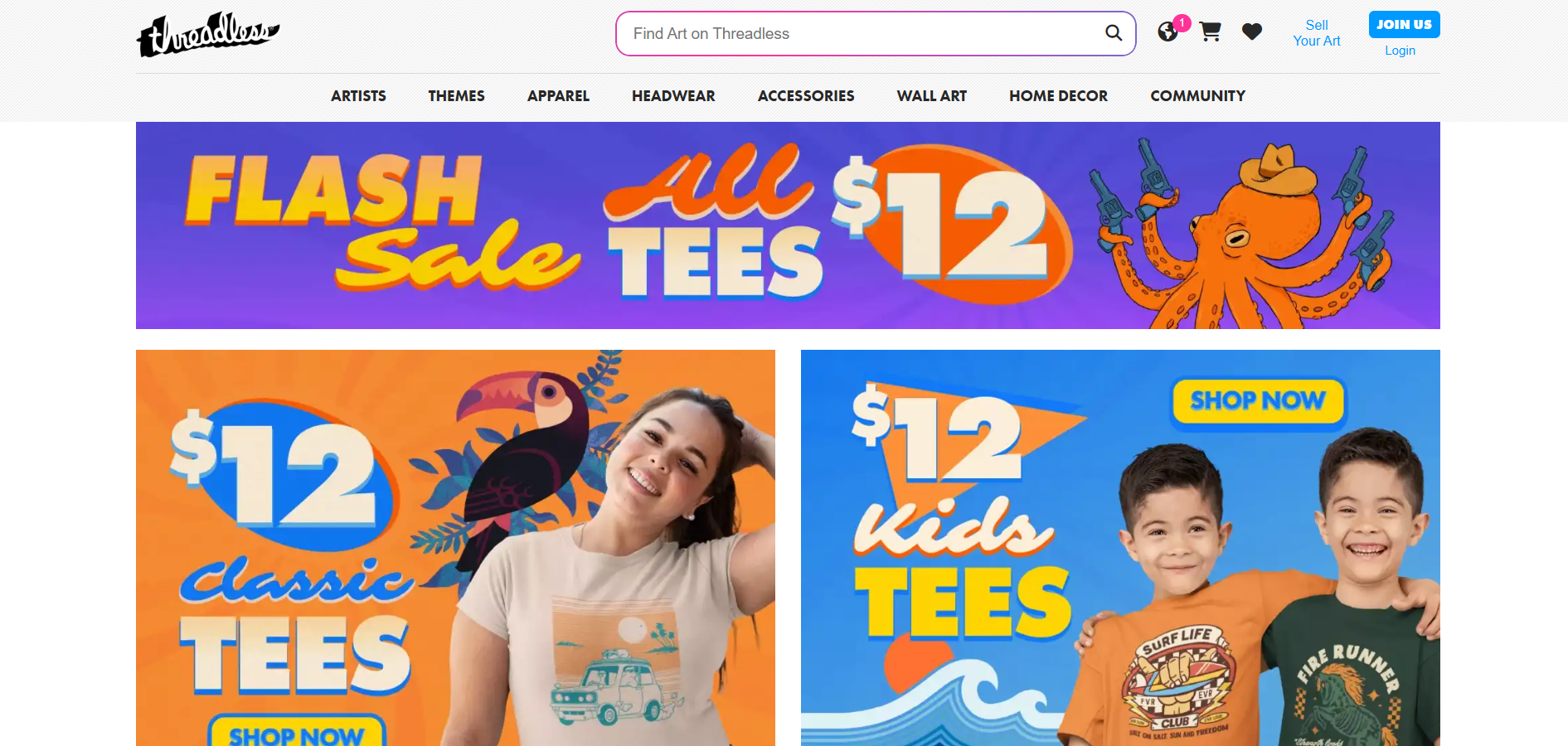
Threadless runs two paths. You can open an Artist Shop and sell instantly, or submit designs to community design challenges where members vote, and winning designs get printed and sold with a payout to the artist. Turn on "let Threadless manage my shop's pricing and promotions" and the platform helps run your store for you.
The challenge route is competitive and slow, but winning is a real credibility signal. The Artist Shop route is open to anyone.
Best for: Artists who want community feedback and curation ✅
Not ideal for: Sellers who want full control over pricing and promos ❌
8. Spreadshirt: sell on a marketplace and your own shop at once

Spreadshirt lets you list in its marketplace and open a branded shop with custom colors and fonts at the same time, so you reach browsing shoppers and your own audience together. Its sister service SPOD (Spreadshirt Print On Demand) focuses on fast fulfillment if you want to connect production to a store like Shopify.
Best for: Sellers who want a marketplace and a branded shop together ✅
Not ideal for: Anyone wanting a single, simple upload flow ❌
Best platforms to sell t-shirts from your own store
Once you know which designs sell, running your own store is where the margins live. You set prices, own the customer relationship, and keep everything above the base cost. The trade-off is that you have to drive your own traffic. These platforms handle the printing so you can focus on the brand.
9. Etsy (plus a POD partner): the most brandable marketplace
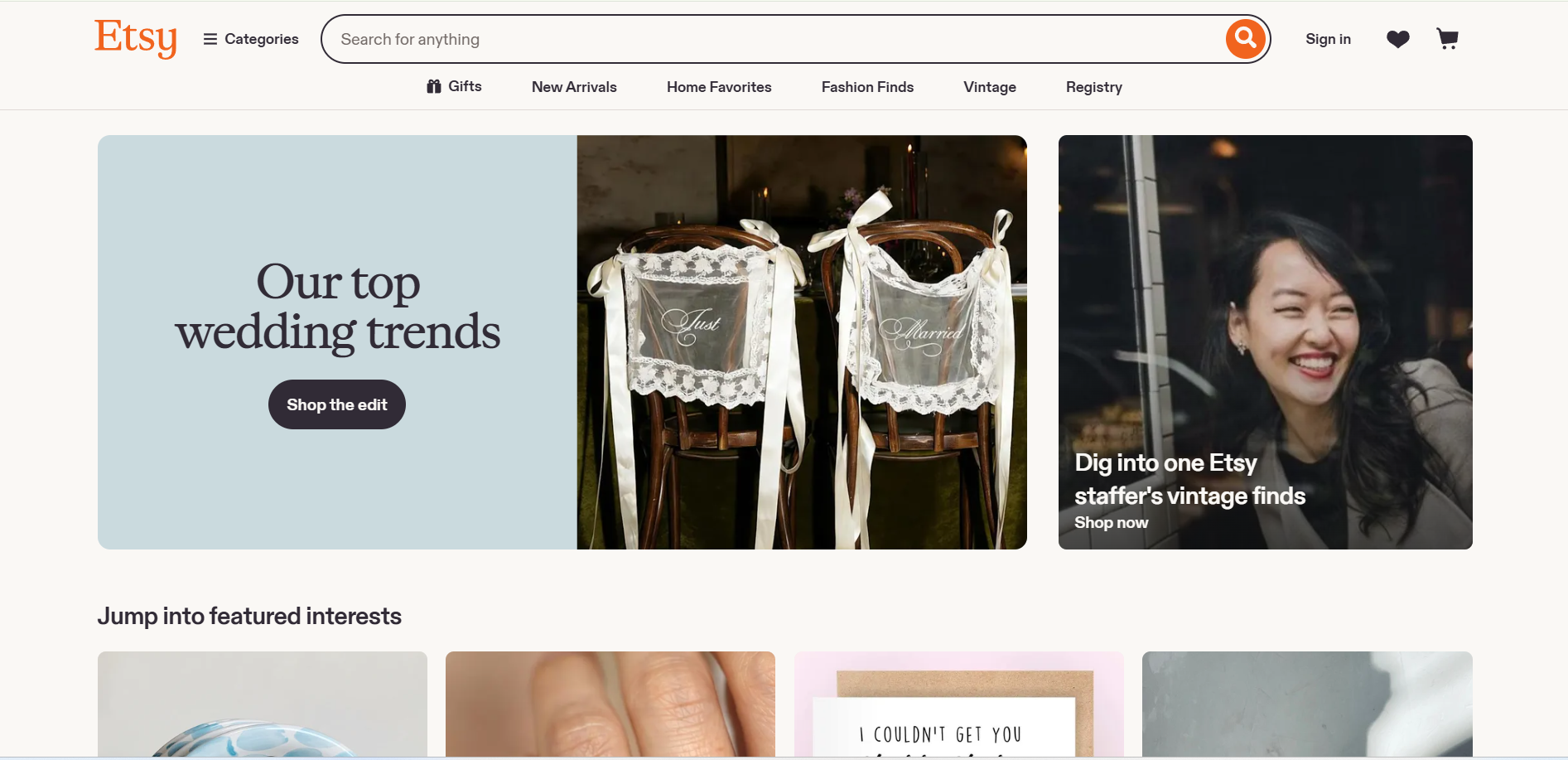
Etsy sits between a marketplace and your own store. It has more than 96 million active buyers already hunting for niche, personal, and handmade-feeling products, which is a natural fit for original t-shirt designs. Etsy itself does not print anything, so you connect it to Printful or Printify to handle fulfillment automatically.
The cost is real but manageable: $0.20 per listing plus a 6.5% transaction fee, on top of your POD base cost. With more than 8 million sellers, a tight niche and good product photos matter more here than raw upload volume. If you are weighing a storefront, our guide to ecommerce graphic design covers what makes listings convert.
Best for: Niche, brandable shops with strong visuals ✅
Not ideal for: Sellers unwilling to optimize listings and manage fees ❌
10. Printful: quality-first fulfillment for your own store
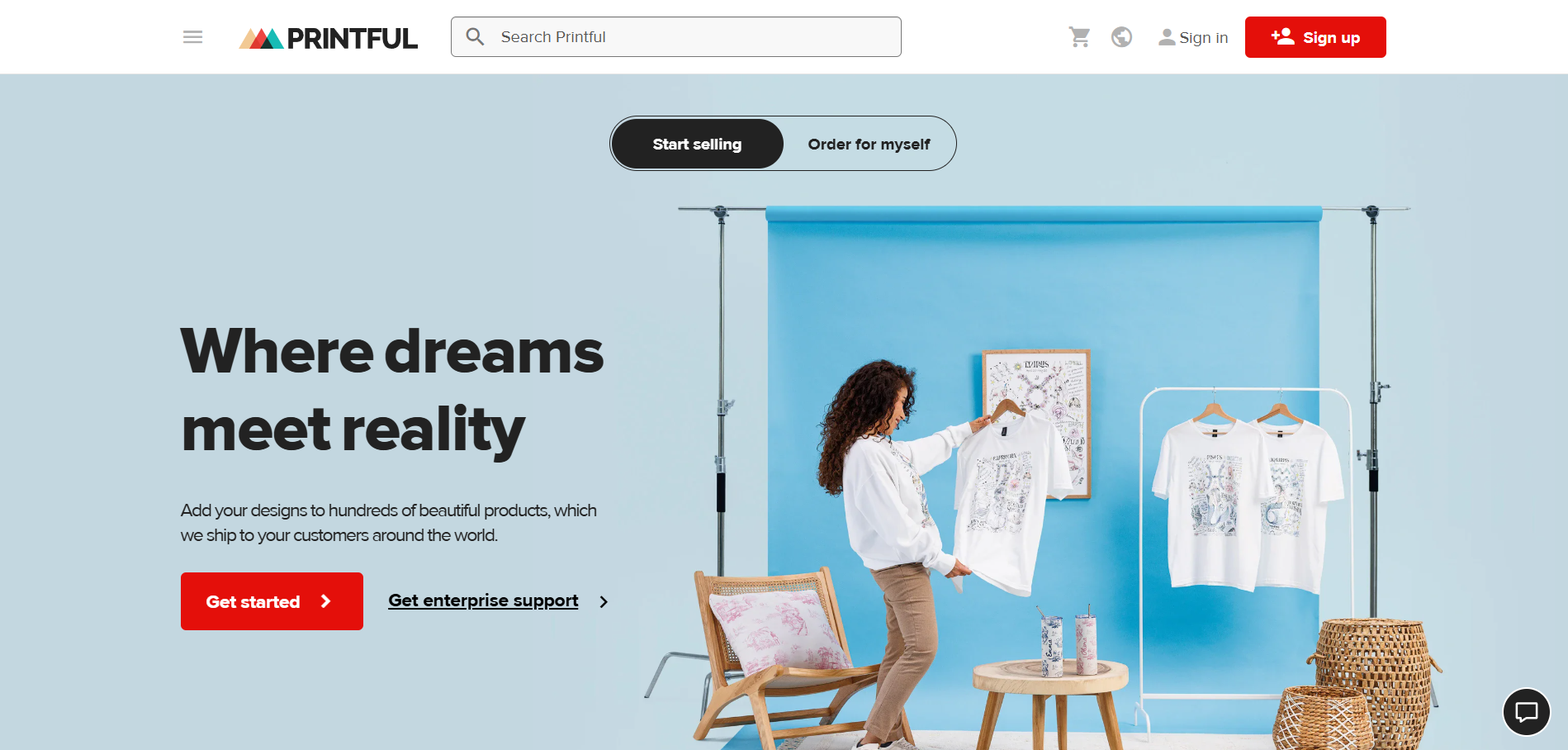
Printful is a print-on-demand supplier, not a marketplace. You connect it to a store you own (Etsy, Shopify, Wix, and more) and it prints and ships each order under your brand. It is known for reliable print quality and easy setup.
Pricing is genuinely free to start: you only pay the product and shipping cost when a customer orders. The optional Growth plan is $24.99/month and unlocks discounts of up to around 33%, and it becomes free once your store passes $12,000 in annual sales. Printful's catalog is a little smaller than some rivals, but the consistency is the selling point.
Best for: Sellers who prioritize print quality and brand control ✅
Not ideal for: Anyone wanting a ready-made audience ❌
11. Printify: the lowest base costs for scaling
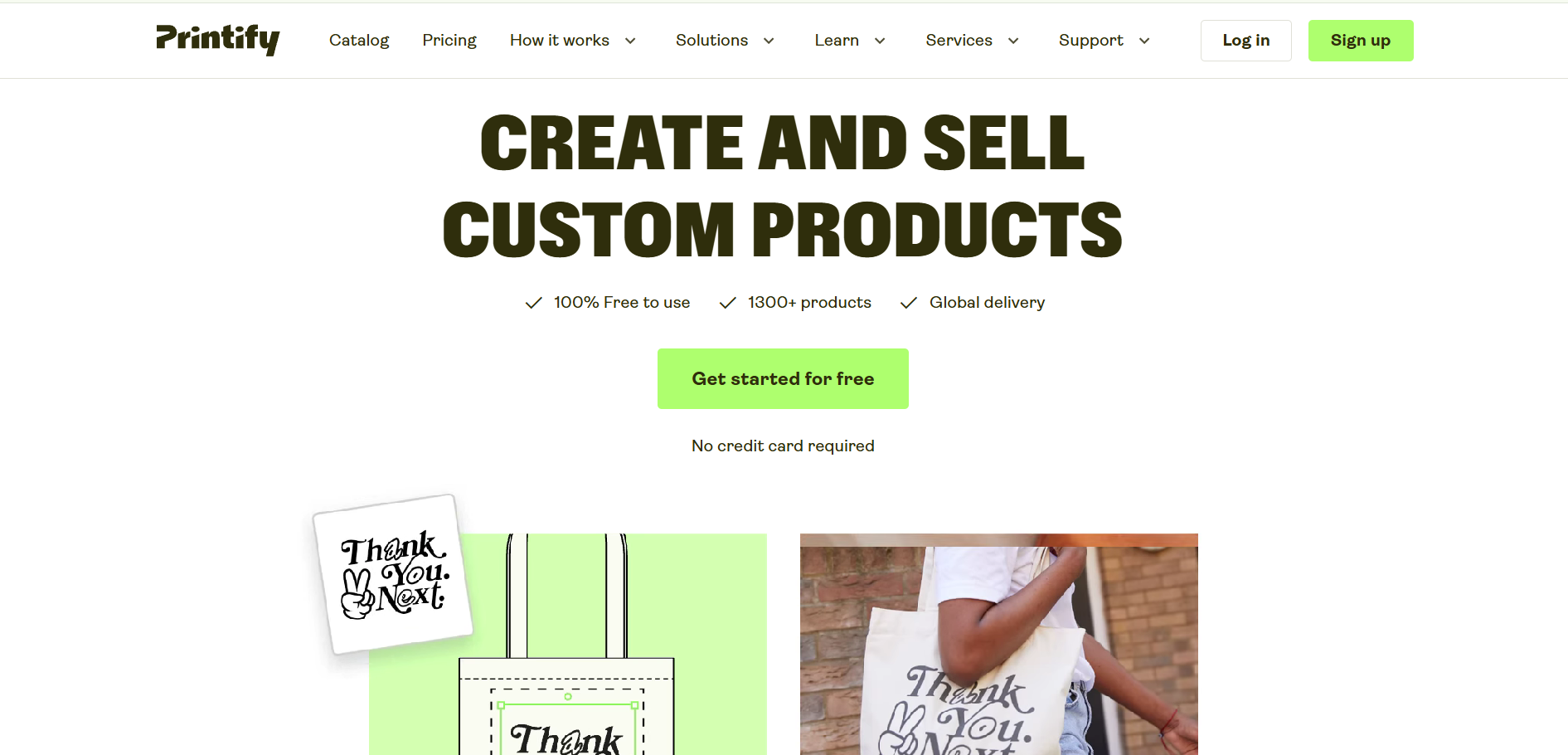
Printify works like Printful (connect it to your own store, it handles production) but runs a network of print providers you choose from, which tends to give the lowest base costs and the widest product range. The Free plan covers up to 5 stores with unlimited designs.
Printify Premium moved to $39/month in February 2026 (or $24.99/month billed annually), and it pays for itself at roughly 16 to 17 orders a month through the extra discounts. Below that volume, stay on the free plan. The one thing to watch: quality varies by print provider, so order samples before you commit a design to one.
Best for: Sellers optimizing margin and scaling volume ✅
Not ideal for: Beginners who want one guaranteed print quality ❌
How to start selling t-shirts online
To start selling t-shirts online, create a few designs, pick one print-on-demand platform, upload your artwork to a product, set your price above the base cost, and publish. Most platforms are free to join, so you can be live the same day. Your first sale then depends on the design and the traffic, not the setup.
Here is the realistic sequence:
- Pick a niche first. "Funny cat shirts for nurses" outsells "cool designs" every time. A tight audience is easier to reach and easier to design for.
- Create designs. Use real design software if you can, or start from t-shirt design templates if you are new. If you are learning the tools, our roundup of design software for beginners is a good start.
- Choose one platform. No audience yet? Start on a marketplace like Redbubble or Amazon Merch. Have a following? Go straight to Spring or your own store.
- Upload, mock up, and price. Add your design, generate mockups, and set a margin you would actually pay.
- Promote and iterate. Watch which designs sell, make more of those, and cut the ones that flop.
The whole design process matters more than the platform. A great design sells on a mediocre platform; a weak design sells nowhere.
Marketplace or your own store: which should you choose?
The right choice comes down to one question: do you already have an audience? If people will buy because they follow you, keep more of the money in your own store. If you are starting from zero, borrow a marketplace's traffic first.
- If you have no audience yet, start on a marketplace (Redbubble, TeePublic, Amazon Merch). They bring the buyers so you can learn what sells. 👉
- If you already have followers, sell through Spring or your own store and keep the full margin. 👉
- If you want to build a lasting brand, run an Etsy or Shopify store connected to Printful or Printify. More work, more control, more profit. 👉
- If you just want low-effort passive income, cross-list the same designs across two or three marketplaces and let volume do the work. 👉
Most sellers do both over time: prove designs on a marketplace, then move the winners into a branded store.
How ManyPixels helps you create designs worth selling
Here is the part every "best platform" list skips: the platform is not what makes you money. The design is. These sites are all quite similar, and the sellers who win are the ones with artwork people actually want to wear. That is the hard part, and it is the part you cannot outsource to a marketplace.
If you have the ideas but not the design skills (or the time), ManyPixels is an unlimited graphic design subscription that can produce the illustrations and t-shirt graphics you sell across any of these platforms. You submit requests, a professional designer delivers a first draft in about 24 to 48 hours, and you own 100% of the rights to everything, which matters when you are the one selling it.
- 💰 Flat monthly pricing from $699/month, with unlimited requests and revisions. Check manypixels.co/pricing for current plans.
- 🎨 A full creative team for shirt graphics, logos, and store visuals, not just one freelancer.
- ⚡ Pause anytime for $10/month when your store is quiet, and pick back up when it is not.
Want to see the fit? Book a quick call or explore the plans.
Frequently asked questions
The bottom line
If you are starting from zero, upload to Redbubble and TeePublic today, add Amazon Merch when you can, and let their traffic teach you what sells. Once you have winners, move them into an Etsy or Shopify store with Printful or Printify to keep more of the money. The platform is the easy part. Get the designs right and any of these will work.
Got a store to fill but no time to design? We help sellers create the graphics that actually move product. Explore ManyPixels plans.
{{GRAPHIC_BANNER="/dev/components"}}

Having lived and studied in London and Berlin, I'm back in native Serbia, working remotely and writing short stories and plays in my free time. With previous experience in the nonprofit sector, I'm currently writing about the universal language of good graphic design. I make mix CDs and my playlists are almost exclusively 1960s.

Top-quality designers
A complete creative team at your fingertips: graphic and web designers, illustrators, and more.

Lightning-fast turnaround
Get start today and receive your first update on the next business day.

All-inclusive pricing
Unlimited requests and revisions. One flat monthly fee. No surprises.
Flexible & scalable model
No contract. Scale up and down as needed. Pause or cancel at anytime.
Continue reading
.jpg)
.jpg)
.jpg)
Explore some of our best designs
Get inspired by a curated selection of ManyPixels work. Download the portfolio to see what our team can create.